Statistical analysis for medical researchers.
Join the waitlist
or sign in if you've been invited





Statistics made easy.
The analysis is often the slowest part of getting a paper out. You're waiting on a statistician with a full schedule, on software you never had time to learn, or on the confidence that you've done it right.
Your evenings have better uses.

Everything between your data and your paper.
Any dataset, cleaned and ready.
DataDoc audits your file automatically — missing values, inconsistencies, wrong data types. What used to take hours of manual work is handled before the analysis begins.
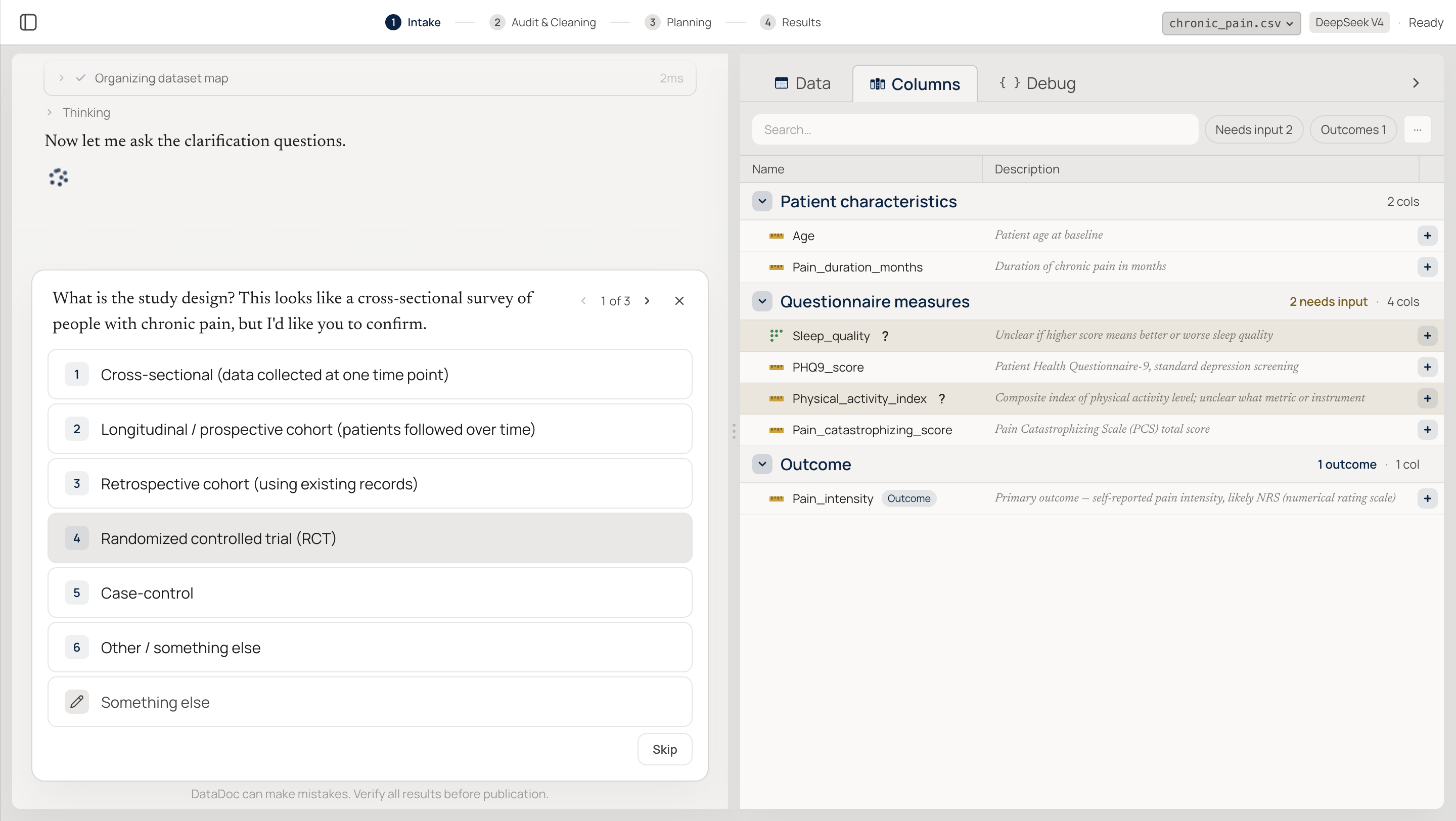
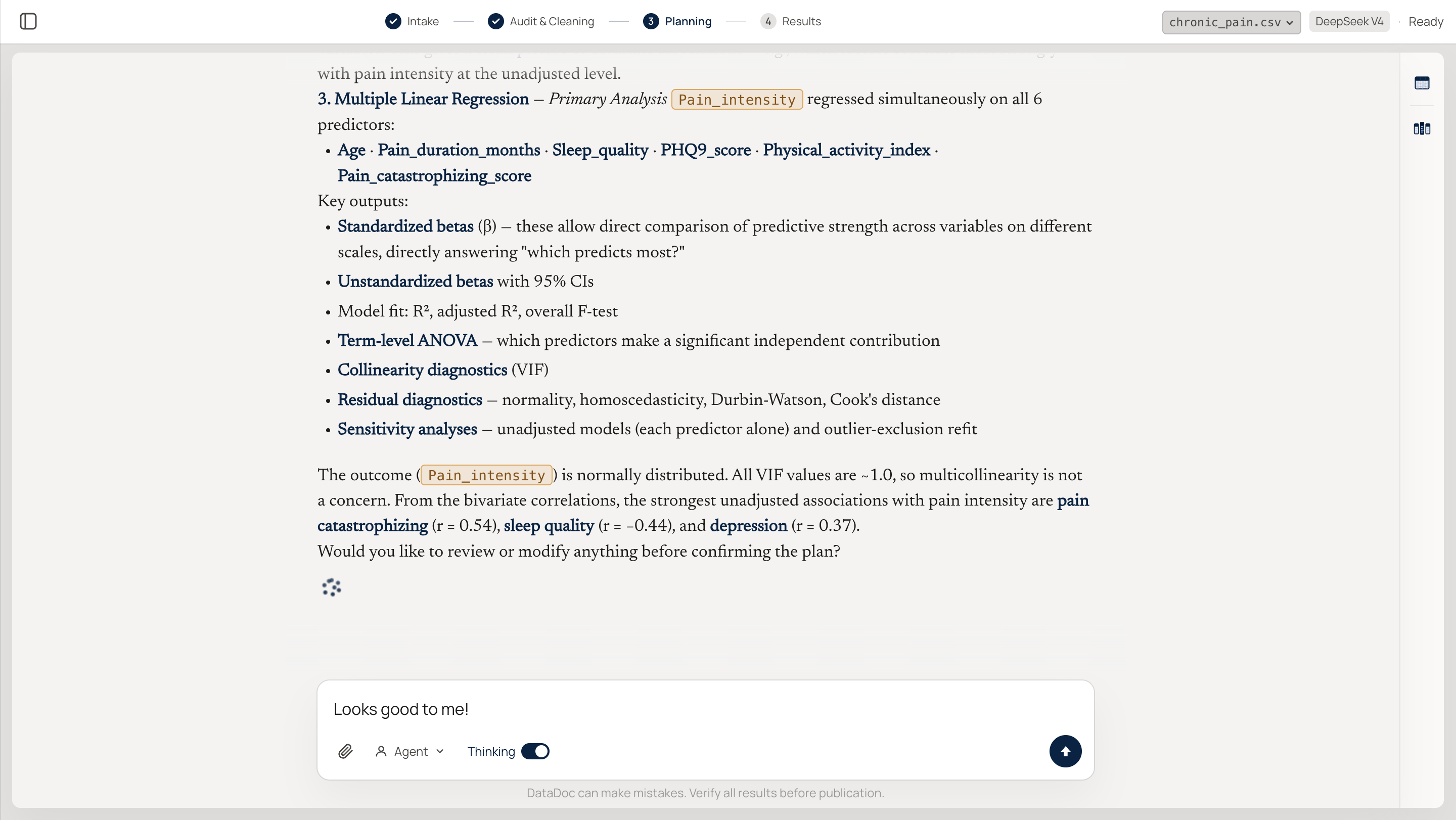
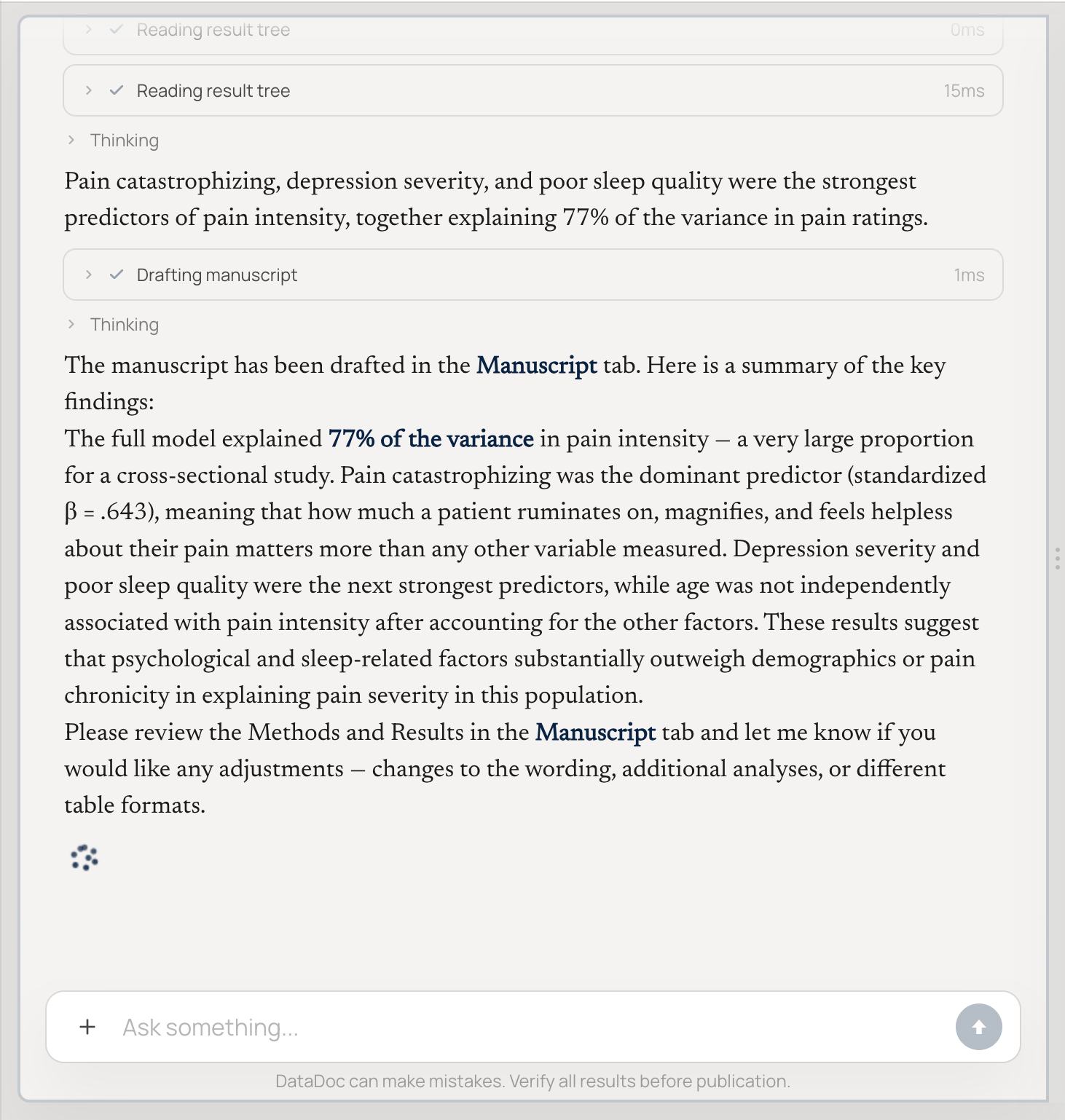
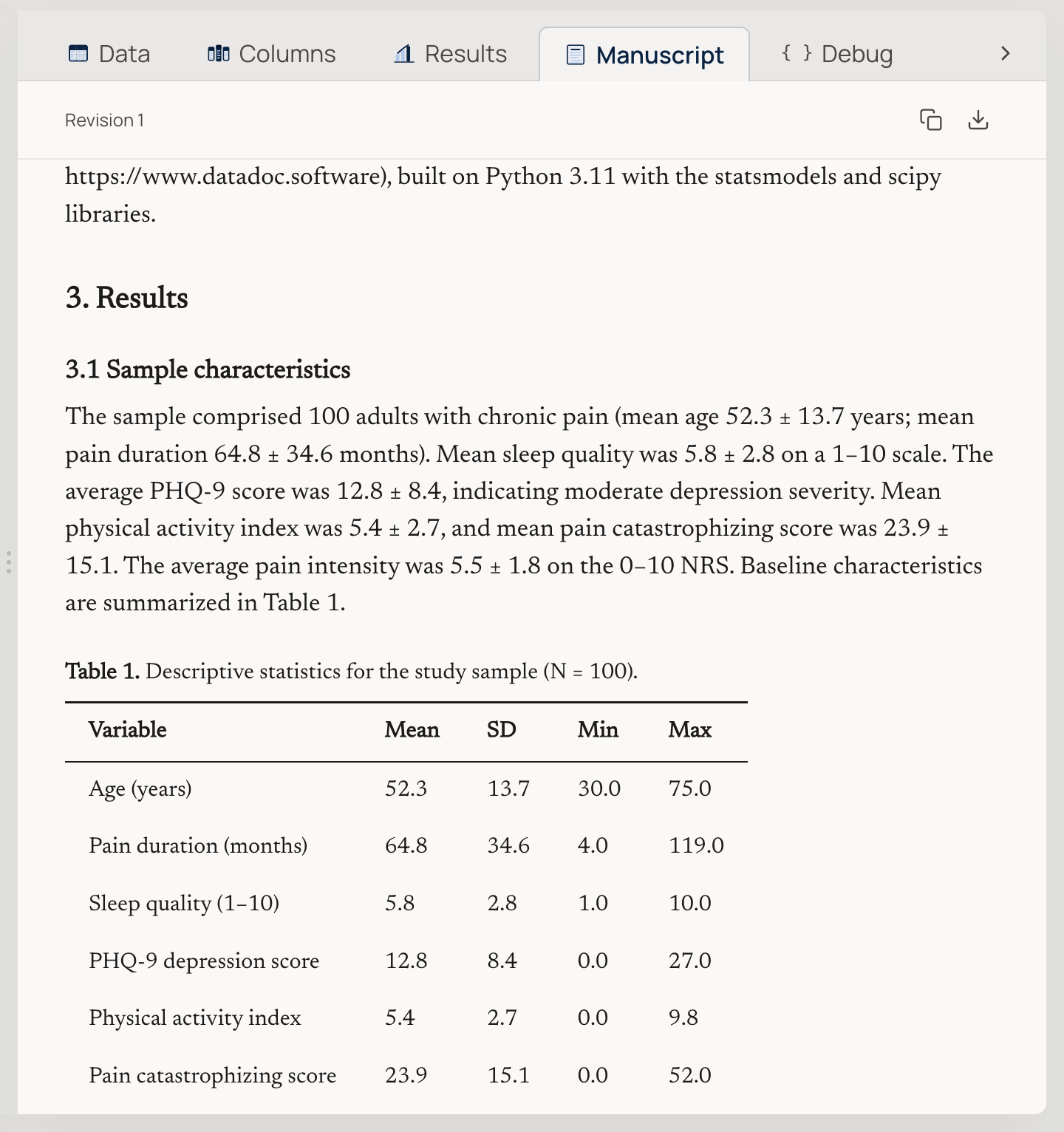
Upload your dataset
Drop in a dataset and describe your research question in plain language.
Data preparation
DataDoc inspects every column, understands it, surfaces issues, and prepares your data for analysis.
Analysis planning
The DataDoc AI proposes the right statistical tests for your study design and explains why.
Calculate results
The DataDoc statistical engine calculates all the results. No AI is involved in this step.
Publication-ready results
Findings are interpreted for you to understand and a manuscript is drafted according to journal standards.
The full range of methods your study needs.
FAQ

For science.
One paper at a time.
or sign in if you've been invited